A Couple of Hosts in Utah
.jpeg)
In 2019, if you happened to find yourself strolling around Salt Lake City, you might just have bumped into Vegvisits hosts, Emily and Christian. Except… you’d have been bumping into people with not the slightest interest in what vegan restaurant you ate at that night, let alone a travel platform that connected them with the world of plant-based travelers/hosts.
However, that’s not entirely true. Around that time they did experiment rather consistently with ‘Meatless Mondays’ for an entire year. But even still, they continued to eat meat, dairy and eggs without the slightest qualms.
And then one day, around 2020, for Emily it just clicked. Suddenly she found herself more open to the idea and as events of the universe often conspire in such cases, she came across a variety of factors (see below), that really pushed her over the edge. Just like that, she was vegan, and since then hasn’t looked back.
We happened to stay with them after a nice little trip to Moab (about 3-4 hours south). They live in a nice, quiet neighborhood, with a big, spacious home that is surrounded by mountains, just outside of Salt Lake City. Emily is a speech pathologist while Christian works as an electrical engineer. They live an active lifestyle, and otherwise appear like your typical 30’s something professional living out life nearby to a big city. But behind the rather empty external façade of roles and things we’re made to wear and look like, are people alive, curious and passionate. Two more who’ve somehow pierced the veil of everyday norm and tradition, and have found themselves committed to a metamorphosis of lifestyle; a lifestyle more cognizant of the reach of their individual decisions.
 |
| Emily & Christian in Arches National Park, Moab |
But you know, it didn’t happen overnight, and for Christian (who still will eat some things with eggs/dairy outside the house, particularly at work events), the journey is still unfolding. Still, a far cry from a Kansas raised farm boy whose presence towers like some Scottish rugby player. Nevertheless, here we are, writing about them.
For the two of them, it technically started after crossing paths with a vegan through Couchsurfing in 2017. But it wasn’t until 2019 that they embraced Meatless Mondays more out of curiosity and in particular, health/environmental interests. But starting in 2020, Emily began doing her own research into animal agriculture, inspiring her to buy her meat and eggs nearly two hours away at what appeared to be the most humane, local source. Still, after watching Game Changers and some ‘Earthling Ed’ videos on YouTube, she made her first dietary overhaul, eating vegetarian during the week, and ‘back to normal’, with meat and things, on weekends.
But after experiencing just how ‘doable’ it was, she took her last bite of meat (a piece of beef jerky) on Halloween 2020, and by that New Year’s (January 2021) she made a vegan resolution, and has stuck with it ever since. At the same time, silently influencing in the background, has been all of the research into factory farming, nutrition, environmental impacts of food production, the psychology (individual and societal) of change, humanitarian issues and just everyday soul searching and questioning. It’s not majorly surprising then, that Christian soon found himself going vegetarian in 2022. And fortunately, they navigated THE major issue when it comes to couples, and the different ways in which they might eat.
They’ve since both become rather passionate, especially Emily. Influencing the status quo seems to be just an inevitable logical extension of letting in this on-going, multilayered phenomenon. But their ideas of ‘how to influence’ and what this (activism) looks like similarly reflects their own evolution and journey. To them, it’s not necessarily as simple as holding a sign, or exhibiting intense passion in public or in the virtual realm. It is subtle, in the same vein of how they so indirectly and coincidentally found it. As they’re both quick to admit, if it had been a more forceful introduction, they may’ve never opened up to it at all.
 |
| Emily & Christian (right) with friends |
The art of sharing ‘vegan’
Their story brings up a few things, and one is this word ‘Collateral Damage’. Usually used in military contexts, it essentially is all the deaths and injuries to so-called innocent people, animals and properties during a so-called ‘necessary’ military action. In economic terms, it usually refers to some sort of ‘negative externality’ for similarly so-called ‘necessary’ industry progress. Nevertheless, it is apt when speaking of vegan activism too.
When we wake up to some emotional, philosophical or spiritual realization that’s altered our perception of reality, it’s hard for a bit of this not to shine through or even want to make itself known. When we learn about something so powerful and impactful that affects all of us, out of sight and mind to most, it’s even harder not to speak up. Then, when you see routine footage of the most innocent of animals packed in, chickens unable to stand, cows crying, rainforest being torn down, highways dominated by fast food, marketing to children, government collusion etc. you want to smash the screen and run down the street screaming.
If we somehow got our act together (and didn’t run down the street screaming), we might think to go and let the people of the world know about this all. It is a very common-sense reaction. However, this is where ‘collateral damage’ comes into play. When we go out there, we’re not talking to ourselves sitting in a quiet room, awoken to this all. No! We’re talking to people en route to dinner, to the movies, to the post office on a busy day, to work, to a million and one places with a million and one different stories or ways of thinking, none of which likely resembles the world we both literally and figuratively found ourselves in.
As such, we interact in a world with a certain emotional delicacy that is hard to appreciate. If we’re too forceful, we might think we’ve simply just ‘pushed the issue’ that much more into someone else’s arena. But that’s not necessarily the case. In all likelihood, we just threatened them incredibly, and rather than hear (truly let it in) our words and/or footage, they now perhaps just registered a most negative impression and memory that has since become associated with the very causes we were promoting. This is collateral damage.
Suddenly, though some proportion of people may’ve been able to stop and let it in, a likely even greater proportion passed by with a very negative impression, thereby building a negative movement alongside a positive one. It’s like removing water from a boat, and puncturing a hole in the same gesture. All two demonstrations are not the same, but the point is just how easy this reality can come about; namely because of how sheltered, anxious and robotic most people can be, and thus how delicate and easily scared. All the while, the writing on the wall is: we are interfering with one of their greatest pleasures (perhaps one they’re on their way to at that very second), that dominates every occasion and they happily experience 3+ times a day for breakfast, lunch and dinner.
Sometimes it’s straight-forward, but most times it’s not. It’s sort of like walking through a crowded grocery store with little aisles. Whatever direction you go in, you always need to look where you are going. To the extent we get stuck in our heads and plow through, we’re likely to knock bottles off shelves, run people over, start a fight, then a riot, the shop closes down, the owners become homeless, the neighborhood starves… ok, that’s enough. You get it.
Peer pressure, even if we felt comfortable making that the standard, doesn’t quite work when you are the minority. It’s sort of the opposite effect. But the real catch-22 is that in a world where it could work, you likely wouldn’t need it. Very few would choose to support what’s now the status quo, which is the ultimate tragedy: vegan in the 21st century is such an easy sell, yet so simultaneously convoluted and hard to come by.
A world outside our bubble
A world outside our bubble
As Emily alludes to: “I resisted going vegan at first, because I thought my life would be miserable, and I couldn’t eat good food. I cried the night before I went vegan because I knew it was the right thing, but was so bummed I was resigning myself to a lifetime of only eating peanut butter and jelly sandwiches”.
 |
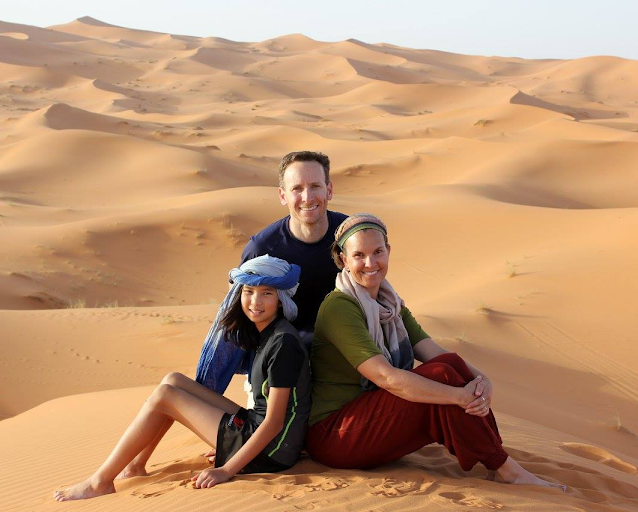
| The amazing deserts Emily & Christian had waiting for us. |
Most vegans might look at that comment as ridiculous. Of course. It is ridiculous too! But it doesn’t change the fact that this was in 2021 (not pre-2000), with someone who’d already gone vegetarian, was well-educated (Masters level) and rather well-researched. Despite all of it, there was such a disconnect of expectations, and after all, it all revolved around this huge elephant in the room of food. This is very much worth keeping in mind. Perhaps it isn’t for want of reasons to change. Perhaps more people would like to change than we imagine…
They mention, ‘having to explain to three different people in a period of two weeks that cocoa doesn’t come from an animal’. Hearing that might help put things in perspective for those of us assuming everyone else similarly lounges in this ‘vegan bubble world’. No! Everyone else has their own bubble, that they too think everyone else is following.
Unfortunately, this all makes the ‘doing’ of activism significantly more complex. We feel the urgency of a burning Amazon and gestation crates and whales in nets, yet must come down to the realities of this spinning (rather crazy) world, and tailor our message or postpone it entirely. No matter how much we might hate it, it still is what it is: consumer dollars shape the world in a million and one ways; one purchase at a time, they are the cumulative missing link in a world run on money; and we simply need some emotional intelligence - or better said, wisdom - to see how and when we can actually help.
Their unique ‘activism’
Emily and Christian, like all of us, had a lot stacked against them. Fortunately, they could go at their own pace (it took a few years), and feel out the change without judgement or some really negative association with the word ‘vegan’. Still, the world doesn’t make it easy, even today. Their friends and family aren’t vegan. Despite ‘vegan options’, this is still very much a ‘non-vegan’ world wherever you go. On top of it all, there is just the sheer difficulty of doing something different, especially something so ingrained and habit forming as eating.
Their unique ‘activism’
Emily and Christian, like all of us, had a lot stacked against them. Fortunately, they could go at their own pace (it took a few years), and feel out the change without judgement or some really negative association with the word ‘vegan’. Still, the world doesn’t make it easy, even today. Their friends and family aren’t vegan. Despite ‘vegan options’, this is still very much a ‘non-vegan’ world wherever you go. On top of it all, there is just the sheer difficulty of doing something different, especially something so ingrained and habit forming as eating.
Their activism reflects their unique, fortunate experience. They’ve participated with some local groups, but ultimately recoiled from the group’s seemingly aggressive tactics. Consequently, short of finding a larger group that resonates with them, like many of us, they find themselves as just two people who care and try to do what they can. Most of the time, experiencing first- hand the food challenges, it has been hosting potlucks (some as big as 40+ people), and showcasing the amazing possibilities of plant-based food. Otherwise it’s just trying to balance that very delicate divide of wanting to spread knowledge/awareness, while also realizing that you might be inspiring your very own voodoo doll collection with pins sticking out for pushing too hard during and around ‘meal time’.
 |
| Pool party potluck in their backyard |
Emily’s ideas, that she hopes to implement in the SLC area, relate to positive education: screenings of documentaries at local universities/ theatres; organized debates (could you imagine?!); family potlucks in public places; weeklong vegan summer programs for kids; vegan holiday parties/events; vegan game nights; and an awesome idea for an incentivized ‘vegan survey’ that could glean all sorts of insights as to how to make this movement better. In short, it’s trying to immerse themselves in the community in which they live.
The vegan survey seems particularly unique and powerful. It’s clear most people love animals. Also, these vegan documentaries/footage really do make a splash. Further, I think most people (with a wide latitude of imagination) want to do the ‘right thing’. So what’s up? Certainly, none of us vegans are particularly special, saintly, unusual or superhuman. Why then are we still the 1 out of 50 (or much less in most places) when we all know how right, sensible and effortless it all feels?
The survey could certainly be insightful, but more, I think it sends a powerful message and is the start of an awesome practice. Instead of, ‘hear me talk, see this, or follow my lead’, it’s: ‘tell me how you feel, where are you at, and I really want to hear from you!’ Suffice to say, this movement, or any worthwhile movement for that matter, can use a bit (or a lot) more of that.
Looking ahead
Emily and Christian went from totally out of sight and out of mind, to now a library filled with books on ‘vegan related’ topics and a general passion. They are the ‘would-be’ vegans of the world that we pass all day, every day, like piles of dormant seeds. They, like us, aren’t all that seemingly different than most. But simply had the fortune of a good experience to let in something that otherwise speaks for itself in the 21st century.
And here we are! Another unique so-called ‘vegan journey’. There’s certainly some powerful social and personal psychological factors at play here. Those of us who’ve found this way of life, without having gotten swept up in blind resistance, are truly fortunate, almost lucky. The inevitable question being, how do we on one hand have a movement, with a large presence, that inspires, educates and perhaps challenges, and yet cultivate the sense of freedom to engage with it that both I, Emily and Christian and so many others experienced? At the very least, how can we do it in our small ways as individuals?
It’s a question to be felt, asked, tried, explored and eventually discussed, all without the slightest ego. And we all have a voice in the conversation too, from life-long vegan to week-long, to would-be, to ‘I still can’t stand all y’all vegans!’. Nevertheless, whatever worked for us, may not work for others, but getting to ‘what works’ is the point and unfortunately that can’t quite be mass produced or automated.
We both really enjoyed crossing paths with Emily and Christian, and hearing their story. They are really cool, their house is really amazing too and we can’t help but really enjoy writing about them. Still, there’s so, so much more that would’ve made this a short novel. Like this one time, when they… No! That’s it. We have to end it here. But if you’d like to hear more or just chill together looking at some beautiful mountains, why not take a trip to Utah. It’s a pretty cool state. When you get out into some of the vast, open spaces there, it’s hard to explain, but there’s just something in the air…
 |
| Us on our way too short stay |
It’s a question to be felt, asked, tried, explored and eventually discussed, all without the slightest ego. And we all have a voice in the conversation too, from life-long vegan to week-long, to would-be, to ‘I still can’t stand all y’all vegans!’. Nevertheless, whatever worked for us, may not work for others, but getting to ‘what works’ is the point and unfortunately that can’t quite be mass produced or automated.
We both really enjoyed crossing paths with Emily and Christian, and hearing their story. They are really cool, their house is really amazing too and we can’t help but really enjoy writing about them. Still, there’s so, so much more that would’ve made this a short novel. Like this one time, when they… No! That’s it. We have to end it here. But if you’d like to hear more or just chill together looking at some beautiful mountains, why not take a trip to Utah. It’s a pretty cool state. When you get out into some of the vast, open spaces there, it’s hard to explain, but there’s just something in the air…
 |
| Check out their amazing home here: https://www.vegvisits.com/rooms/45274 |


.png)


